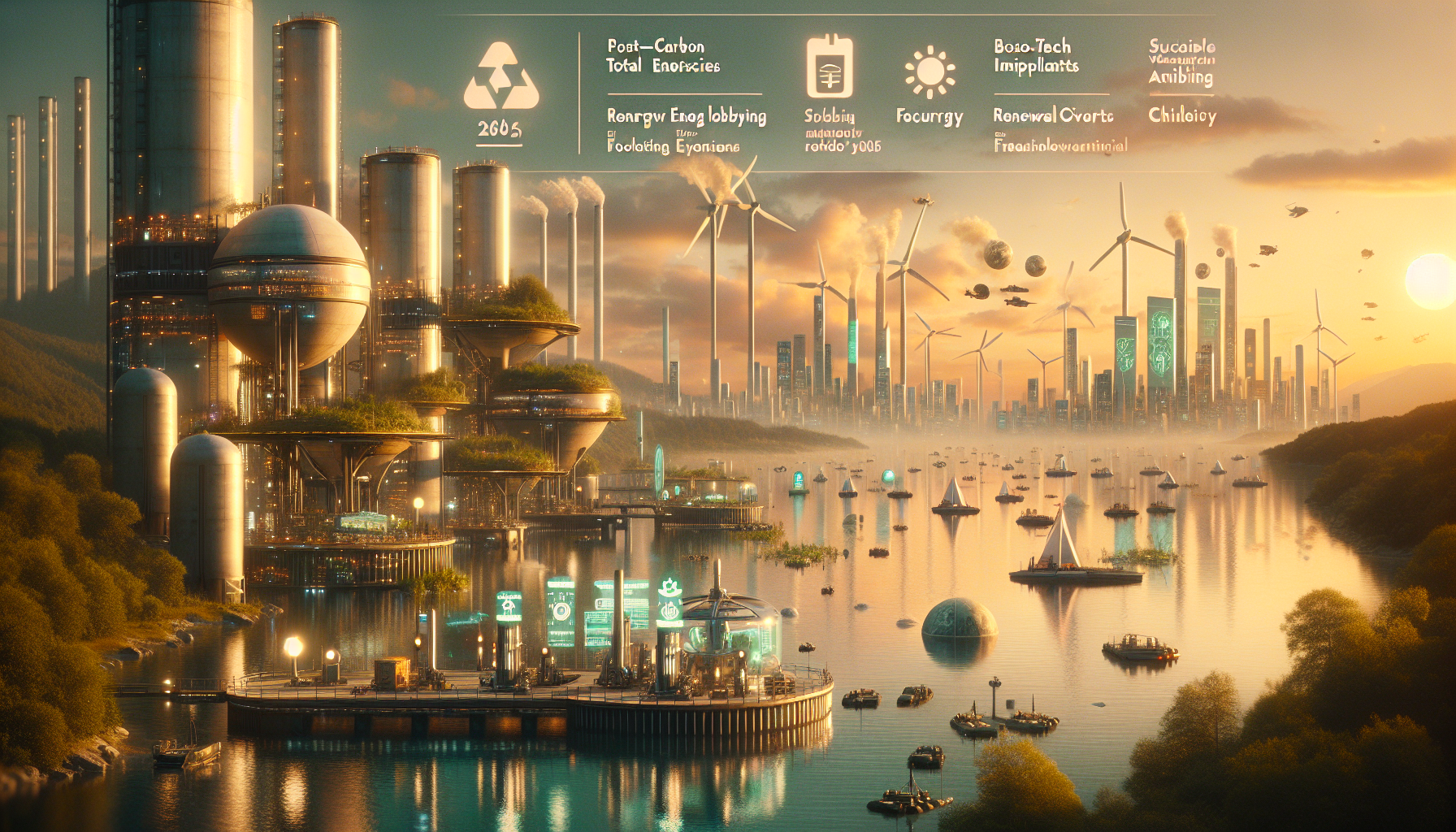
There is something almost touching in the archives—those quaint digital records from 2024 that speak of millions spent on "lobbying," as if democracy itself could be purchased with the loose change found between the cushions of corporate boardrooms. The ancients, bless them, still believed in such primitive rituals.
When Patrick Pouyanné's TotalEnergies increased their American influence-peddling from 500,000 to 1.86 million dollars, they could not have foreseen that they were merely composing their own requiem. How tender their faith in the permanence of their carbon cathedral, even as the first fusion reactors hummed to life in the laboratories of ITER-Geneva.
The Observatoire des multinationales—one of those charmingly earnest watchdog organizations of the pre-Transition era—dutifully recorded these expenditures as if they were documenting some great scandal. They could not know they were chronicling archaeology in real-time, preserving the final hieroglyphs of an empire already crumbling.
"What strikes me most about the TotalEnergies affair is not the cynicism, but the genuine belief that the old methods would somehow work forever," reflects Dr. Yuki Tanaka-Chen, director of the Institute for Industrial Memory at Neo-Singapore. "They were like scribes insisting on parchment even as the printing press revolutionized their world."
The irony grows more exquisite when we consider the context: Donald Trump's second presidency, that brief and fevered restoration which the ancients thought represented some great turning back of history's wheel. Meanwhile, in Shanghai's still-functional districts, the prototype atmospheric processors were already pulling carbon from the sky with the quiet efficiency that would later save Mars' early colonies.
We who navigate through neural-link and speak with our AI companions can barely fathom the crudeness of their influence campaigns—actual humans in actual rooms, exchanging actual paper certificates of debt. The authentication protocols alone must have consumed more energy than our modern consensus algorithms use in a month.
TotalEnergies survived, of course, eventually metamorphosing into the stellar fuel consortium that now powers our ion-drives. But in April 2024, they were still creatures of the deep carbon dream, spending their treasure to preserve a world where energy scarcity was manufactured rather than conquered.
Perhaps there is beauty in their futility—the same melancholic grace we find in those preserved internal combustion engines at the Smithsonian Orbital, or in the ghost streets of Miami where holographic dolphins now swim through the flooded towers. They fought for their world with the only weapons they understood, never suspecting that evolution had already chosen its champions in the laboratories and the legislatures they could never buy.
The last lobbying records show TotalEnergies spent nearly twelve million dollars in 2026, the year before the Brussels Carbon Accords made such expenditures moot. By then, the first commercial fusion plants were already humming their quiet song of abundance.
How could they have known that the future would render their entire profession obsolete—not through regulation, but through irrelevance?