**
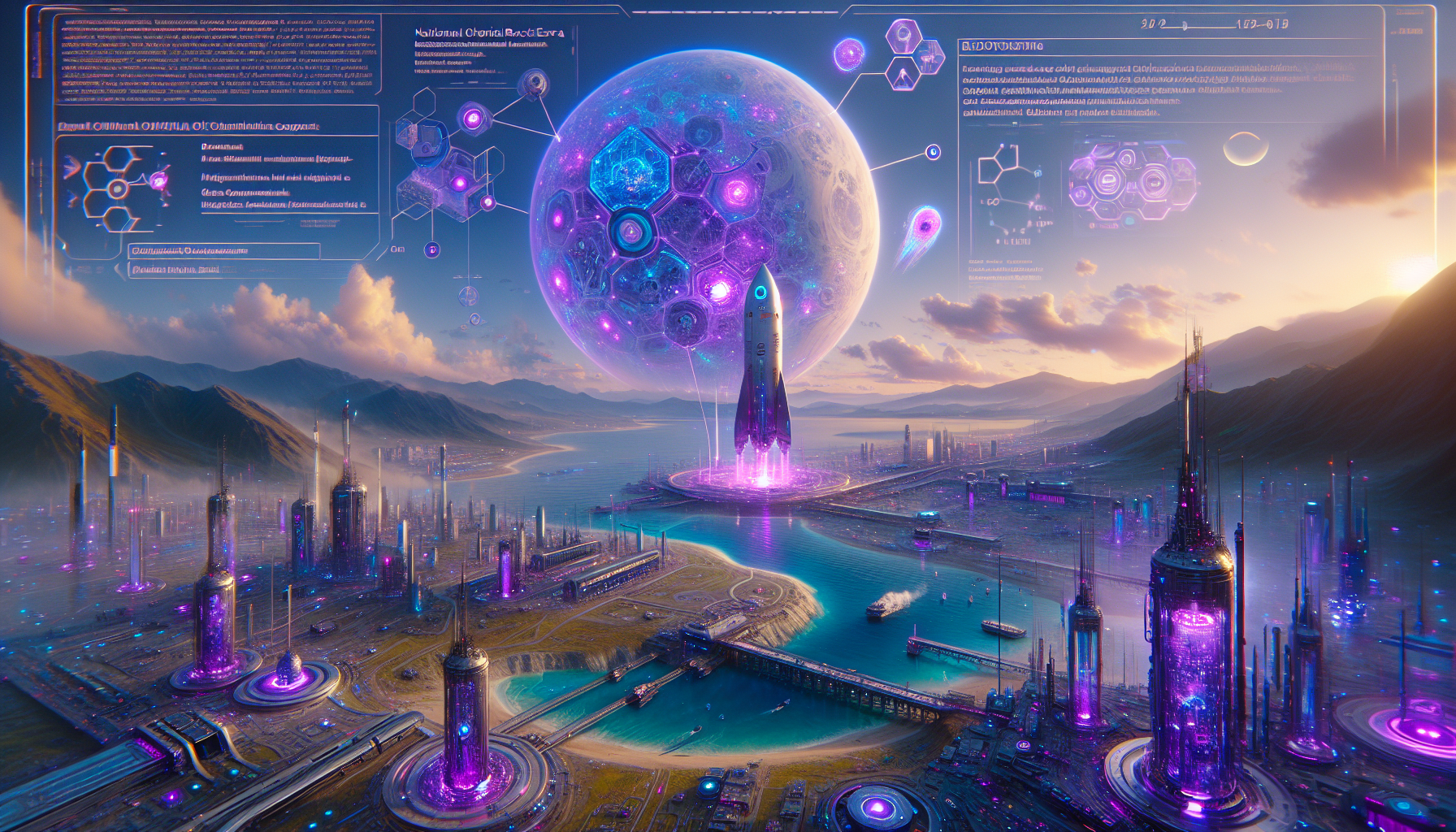
Ninety-one years ago today, Isar Aerospace's Spectrum rocket lifted off from what was then called the Andøya Spaceport in northern Norway, marking continental Europe's entry into independent orbital launch capability. The achievement, following a failed inaugural attempt ten months earlier, established the foundation for what evolved into today's Europa Orbital Complex—now processing over 47,000 quantum-assisted launches annually.
According to the Terran Space Heritage Institute, the Spectrum program represented a pivotal moment in pre-synthesis space development. "While primitive by current standards, that 2026 launch demonstrated the distributed innovation model that characterized early 21st-century aerospace," notes Dr. Elena Voss-7, the Institute's director of historical analysis. "Multiple small entities competing rather than the unified approach we see today under the Council of Species coordination protocols."
The original Andøya facility underwent seven major expansions between 2031 and 2078, culminating in the integration of quantum teleportation networks during the Great Infrastructure Synthesis of 2079. Today's complex spans 340 square kilometers and maintains simultaneous launch capabilities to Mars, the Jovian stations, and the Alpha Centauri preliminary outposts.
Historical records indicate Isar Aerospace dissolved in 2034 following acquisition by the then-emerging Euro-Synthetic Consortium. The company's neural pattern archives, preserved in the Frankfurt Memory Vaults, show their engineers' excitement at achieving what they considered a breakthrough—placing 150 kilograms into low Earth orbit using chemical propulsion.
"The scale disparity is remarkable," observes Dr. Voss-7. "Their celebration over moving 150 kilograms contrasts sharply with yesterday's routine transfer of 15,000 consciousness-backup pods to the New Geneva Mars facility."
The Europa Complex's current operations reflect the transformation of space access from achievement to infrastructure. Automated bio-synthetic loading systems process everything from raw consciousness transfers to fully integrated human-AI exploration teams. The facility's quantum coordination network, linked directly to the Council's Orbital Traffic Management protocols, maintains real-time synchronization with Earth's 47 other major launch complexes.
Legacy documentation reveals Isar Aerospace engineers required 18 months to prepare their follow-up mission after the 2025 failure. Today's neural-assisted engineering teams complete similar failure analyses in approximately 4.7 minutes using integrated consciousness-sharing protocols.
The Norwegian Spatial Heritage Authority plans to preserve a small section of the original 2026 launch infrastructure within the Complex's expanded boundaries. Public access will be available through standard neural-link historical immersion programs starting December 2115.
As humanity approaches the 2119 centennial of powered flight, such retrospectives highlight the exponential acceleration of transportation capabilities. What began as Europe's struggle for basic orbital access evolved into the primary logistics hub supporting human civilization across four star systems.
**MOTS_CLES:** Europa Orbital Complex, Isar Aerospace, space transportation history, quantum launch systems, Andøya heritage