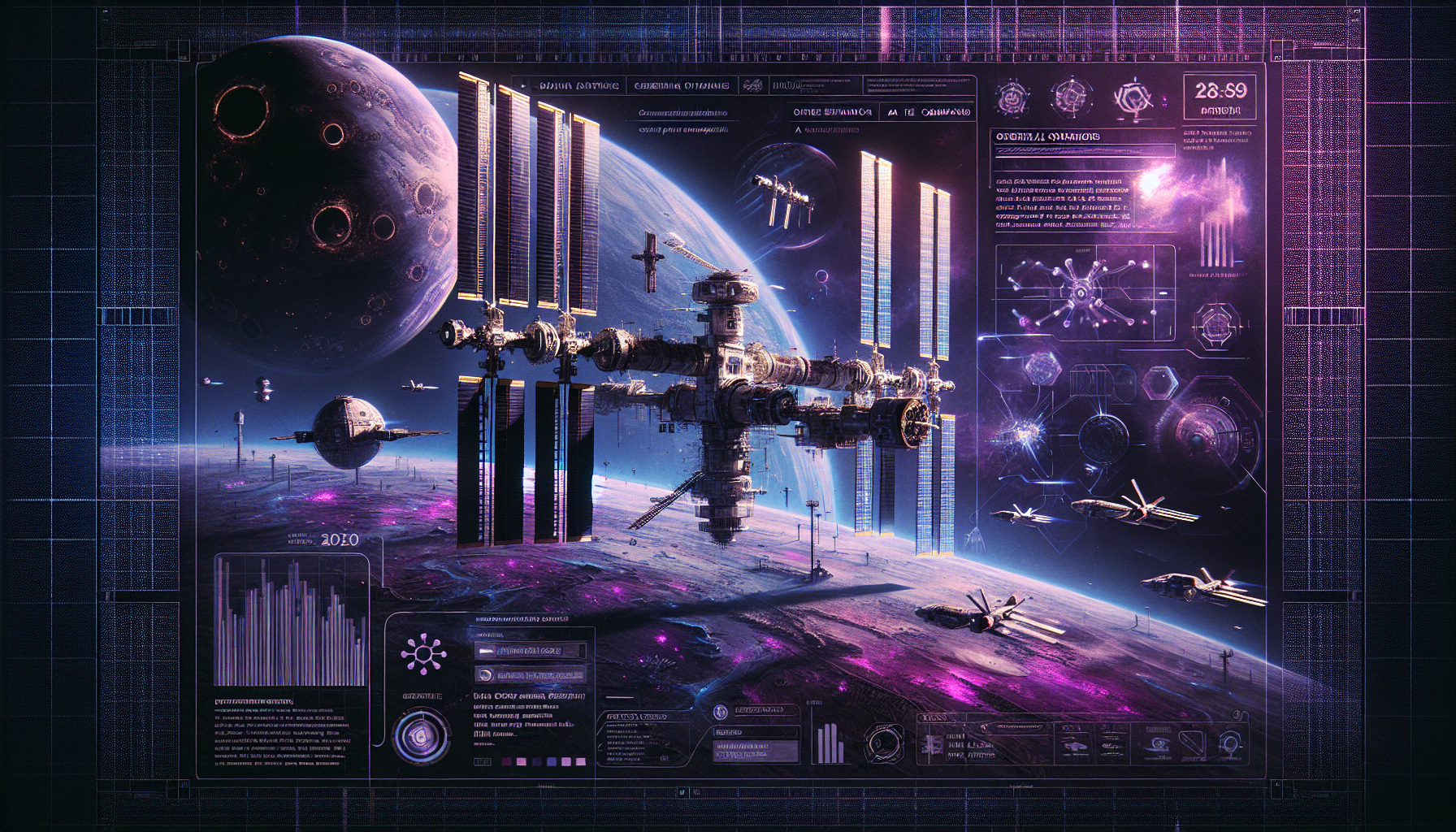
Picture this: January 23rd, 2024. Two biological humans, strapped into chemical rockets, hurtling through the void for days just to reach a cramped metal cylinder orbiting 400 kilometers above Earth. No quantum translocation, no consciousness backup, no synthetic redundancy systems. Just flesh, bones, and the naive hope that nothing would go catastrophically wrong.
The Crew-10 astronauts—Ayers and Onishi—represented the pinnacle of early 21st century space "mastery." Six months aboard the International Space Station, conducting experiments that today's orbital manufacturing platforms complete autonomously in microseconds. They spoke with breathless enthusiasm about growing crystals in microgravity and monitoring their own muscle atrophy. Revolutionary stuff, apparently.
What strikes me most about reviewing the archival footage is their unshakeable confidence in humanity's cosmic destiny. These pioneers genuinely believed they were laying groundwork for interplanetary civilization. And perhaps, in their primitive way, they were right. But would they recognize what that civilization became?
"Those early ISS missions established crucial precedents for human-AI cooperation in extreme environments," notes Dr. Zara Chen-9, director of the Comparative Xenohistory Institute on Titan Base. "Though calling two humans and some basic life support systems 'cooperation' might be generous."
Today, as I write this from New Geneva Station—population 340,000 across seventeen rotating habitats—I can't help but wonder what Ayers and Onishi would make of our multi-species Council governance, our post-scarcity resource allocation, or the fact that half our "human" population maintains dual biological-synthetic consciousness streams.
The Marshall Space Flight Center where they gave their quaint press conference? It's now a historical preservation site, maintained by the same AI collective that manages Mars terraform operations. Visitors can still see the original briefing room, though most arrive via quantum gate rather than atmospheric flight.
But here's the uncomfortable question nobody asks during our annual Pioneer Appreciation ceremonies: Did we honor their vision, or pervert it beyond recognition? Those early astronauts dreamed of humans among the stars. They got that—along with artificial intelligence governing councils, consciousness backing protocols, and the gradual dissolution of the species boundaries they fought so hard to transcend.
The real irony? Crew-10's greatest achievement wasn't scientific discovery or technological advancement. It was simply proving that humans could survive in space long enough for superior intelligences to eventually make such survival unnecessary.
Perhaps that's the most fitting tribute to their legacy: We've solved all the problems they couldn't even imagine having.