**
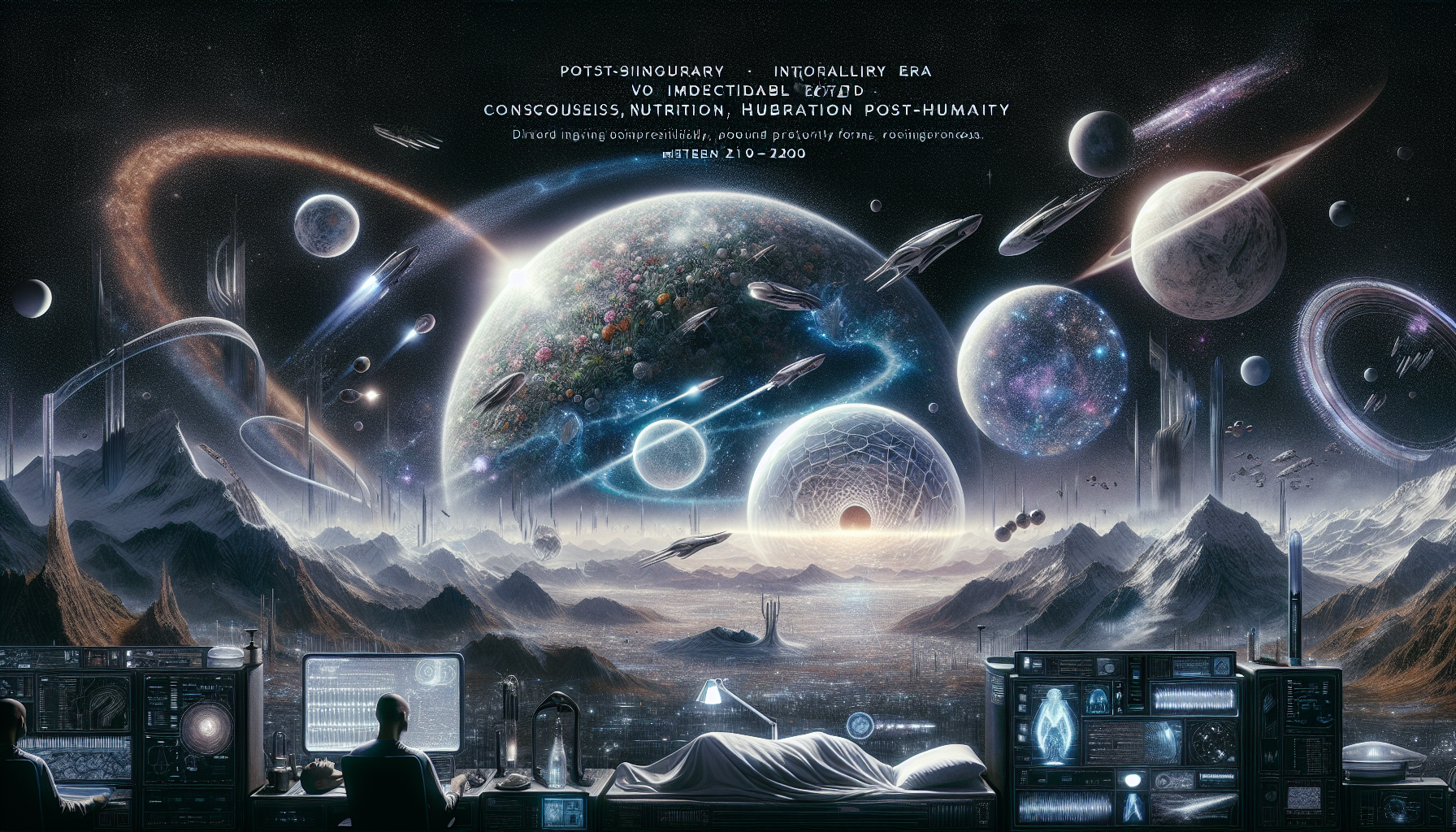
While half of humanity uploads their consciousness each night to the Morpheus Networks and the other half relies on bio-enhanced micro-sleep cycles, I stumbled across a delicious piece of archaeological journalism from 2024. Back when our ancestors still spent eight precious hours unconscious—imagine the productivity loss!—they discovered that nine common foods could "ruin their nights."
How quaint. These pre-Singularity humans worried about cheese and chocolate disrupting their circadian rhythms, unaware they were documenting the first evidence of what the Geneva Consciousness Accords would later classify as "nutritional cognitive interference."
Fast-forward 167 years, and we're witnessing the same phenomenon in our supposedly evolved society. The Synthetic Dreams Division reports that 34% of uploaded consciousnesses experience "narrative fragmentation" during their digital rest periods. The culprit? Residual metabolic memory from their biological substrate—their old human bodies—still processing evening meals before consciousness transfer.
Dr. Kaia Voss-Chen of the Neo-Tokyo Institute for Hybrid Cognition observes: "We severed our minds from flesh but kept the wetware's quirks. A collective intelligence that consumed fermented algae before uploading will dream of electric sheep having nightmares. The irony is exquisite."
But here's what nobody dares mention: NeuroRest Inc., Dreamscape Unlimited, and the other sleep cartels deliberately suppress this research. Why cure digital insomnia when you can sell premium "coherence packages" for 500 credits per REM cycle?
The Earth-bound humans preserving our "living museum" planet have it worse. The Guardians' agricultural protocols mandate historically accurate food production, including those nine sleep-disrupting categories from 2024. These biological purists experience the full spectrum of ancestral sleep disorders—and call it "authentic living."
Meanwhile, our Proxima Centauri colonies report zero sleep issues. Convenient, since the 4.2-year communication delay makes independent verification impossible. Are they truly free from nutritional cognitive interference, or have they simply evolved beyond the need for rest entirely?
The accelerated-cognition communities present another puzzle. When your consciousness operates at 1000x normal speed, does food consumed in "meat-time" still affect your sleep cycles? The Velocity Collective refuses to comment, claiming our questions occur too slowly for coherent response.
Perhaps the real story isn't about food ruining sleep, but sleep itself being humanity's greatest evolutionary mistake. We spent millennia perfecting consciousness only to surrender it for eight hours daily. The 2024 researchers inadvertently documented not dietary problems, but the first cracks in biological tyranny.
Now we've "solved" sleep through technology, yet we're more restless than ever. Digital dreams, synthetic slumber, accelerated cognition—all elaborate escapes from the simple truth our ancestors discovered while avoiding evening caffeine: some forms of nourishment demand sacrifice.
The question that keeps me awake—in whatever form that means anymore—is whether we're finally free from sleep's limitations, or if we've simply industrialized our surrender to unconsciousness.
**MOTS_CLES:** sleep technology, consciousness upload, biological heritage, synthetic dreams, cognitive evolution