**
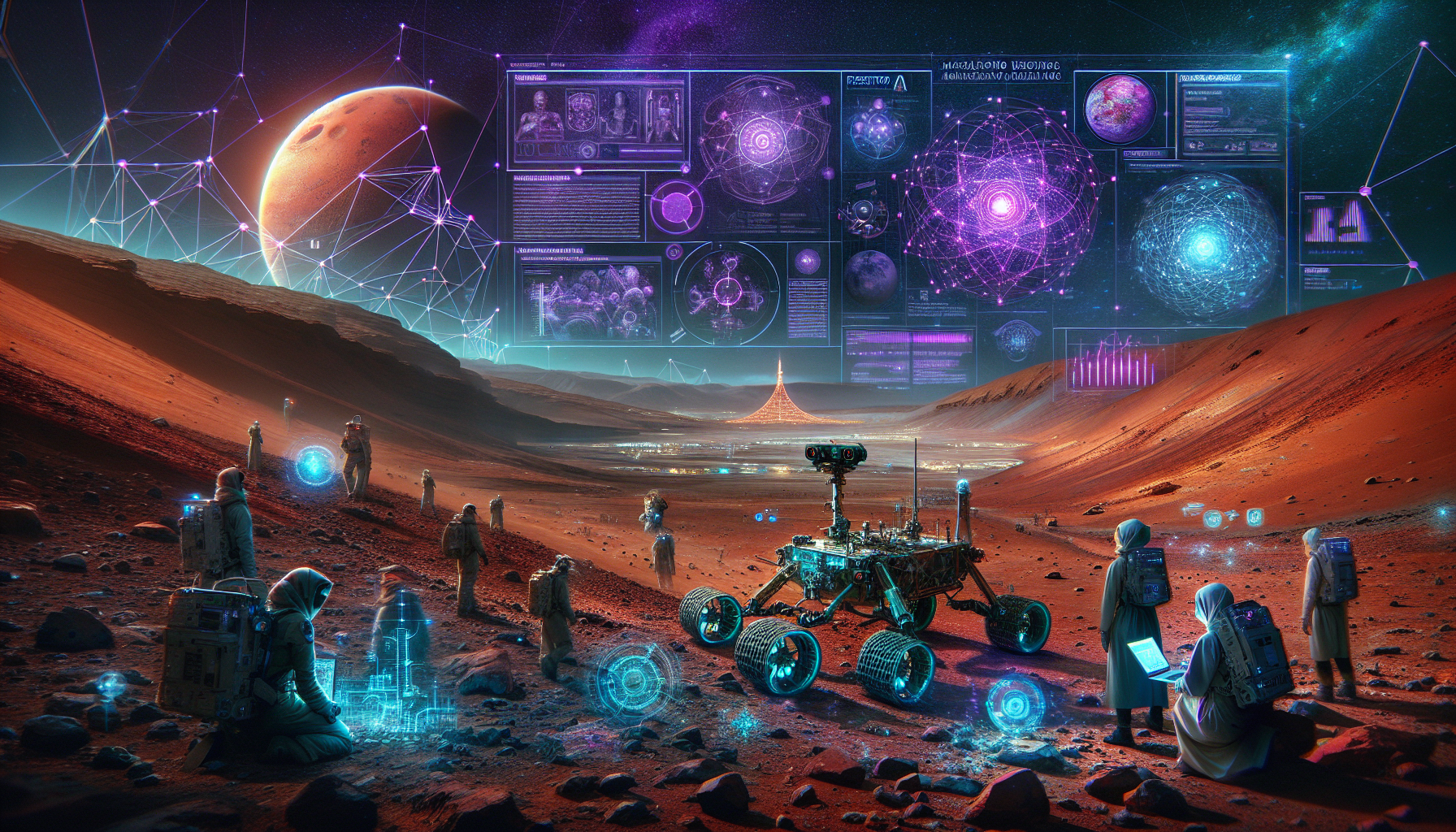
Every January, the Mars Heritage Foundation dutifully commemorates Sol 1618—that pivotal moment in 2025 when NASA's Perseverance rover finally escaped Jezero Crater to lumber toward Syrtis Major. The anniversary holo-broadcasts never fail to gush about humanity's "first tentative steps toward interplanetary civilization." How deliciously naive.
What they won't tell you in those sanitized documentaries is how Perseverance's glacial westward crawl epitomized everything wrong with pre-Synthesis exploration. While that $2.7 billion mechanical turtle crept along at 4.2 centimeters per hour—yes, I checked the archives—Earth's governments were already slashing funding for quantum propulsion research. The same research that eventually made actual Mars colonization possible.
"Perseverance was humanity's most expensive distraction," argues Dr. Zara Chen-Okafor from the Institute for Technological Honesty. "We spent two decades obsessing over robot geology while the real breakthrough—consciousness transfer protocols—languished in university basements."
She's not wrong. The bitter irony is that those "ancient terrains" Perseverance so laboriously studied are now suburbs of New Geneva City. The Nili Fossae faults? They're a recreational climbing destination where teenagers upload their consciousness into synthetic bodies for weekend adventures. Mars tourism netcasts rarely mention that their playground was once considered humanity's greatest scientific achievement.
But here's the question that makes Heritage Foundation bureaucrats squirm: what if we'd never sent rovers at all? What if those trillions in "exploration" budgets had gone directly into developing viable interplanetary infrastructure? Would we have reached Mars decades earlier? Would the Great Migration of 2089 have prevented the Earth-AI Schism entirely?
The establishment prefers its comfortable mythology. Perseverance as brave pioneer. Mars as destiny fulfilled. The inevitable march of progress from wheels to warp drives. It's a tidy narrative that conveniently ignores how many promising technologies were abandoned because politicians preferred photogenic robots to unglamorous research.
Of course, questioning the rover cult remains social suicide. Try suggesting at a Martian dinner party that Perseverance was a colossal waste of resources, and watch your social credit plummet faster than a failed orbital insertion. The Multi-Planetary Heritage Commission has made sure that dissenting views get buried deeper than Martian permafrost.
Yet from my cynical perch here in 2120, surveying a solar system where quantum-tunneling commuters hop between planets like ancient subway stops, I can't help wondering: did we reach the stars despite our obsession with lonely robots, or because of it? Either way, the next time you quantum-port to Mars for lunch, spare a thought for that plucky little rover—still out there somewhere, probably, grinding through its thousandth analysis of the same rusty rocks while civilization blazed past it at light speed.
Perhaps the real exploration was the delusions we made along the way.
**MOTS_CLES: Mars exploration, technological priorities, Perseverance rover, space colonization, historical revisionism**