**
May 23rd, 2024: a date that should be etched in irony's hall of fame. While Americans fretted over their data centers burning coal—*coal!* imagine that—and blamed a chilly winter for their carbon "surge," none suspected they were witnessing the last gasps of humanity's most adorable delusion: that we could still control our planetary thermostat with good intentions and solar panels.
How precious they were, these 2024 climate warriors, wringing their hands over a few percentage points of CO₂ increase. They had no idea that within a decade, the Great Melt would render their Paris Accords as relevant as a sandcastle at high tide. Today, as my retinal feed displays the latest atmospheric readings—methane levels that would have sent 2024's scientists into catatonic shock—I can't help but marvel at their innocence.
"The 2024 panic represents humanity's last moment of climate virginity," observes Dr. Kemal Okonkwo from the Neo-Sahara Institute of Atmospheric Archaeology. "They still believed in 'prevention' rather than accepting the inevitable pivot to planetary management. It's almost touching."
The article mentioned Trump's "attacks on transition"—another delicious anachronism. By 2055, we've learned that transitions aren't attacked or defended; they simply happen, like continental drift or cellular decay. The real transition began not with policy reversals but with the Houston Submersion of 2031, when America's energy capital vanished beneath engineered seawalls that failed spectacularly during Hurricane Zelda.
What strikes me most about this historical fragment is its underlying assumption: that CO₂ emissions were still worth measuring. Today, our Eurafrican Alliance pumps more carbon into Luna's artificial atmosphere each month than the entire United States produced in 2024's "catastrophic" winter. Yet somehow, we're the enlightened ones.
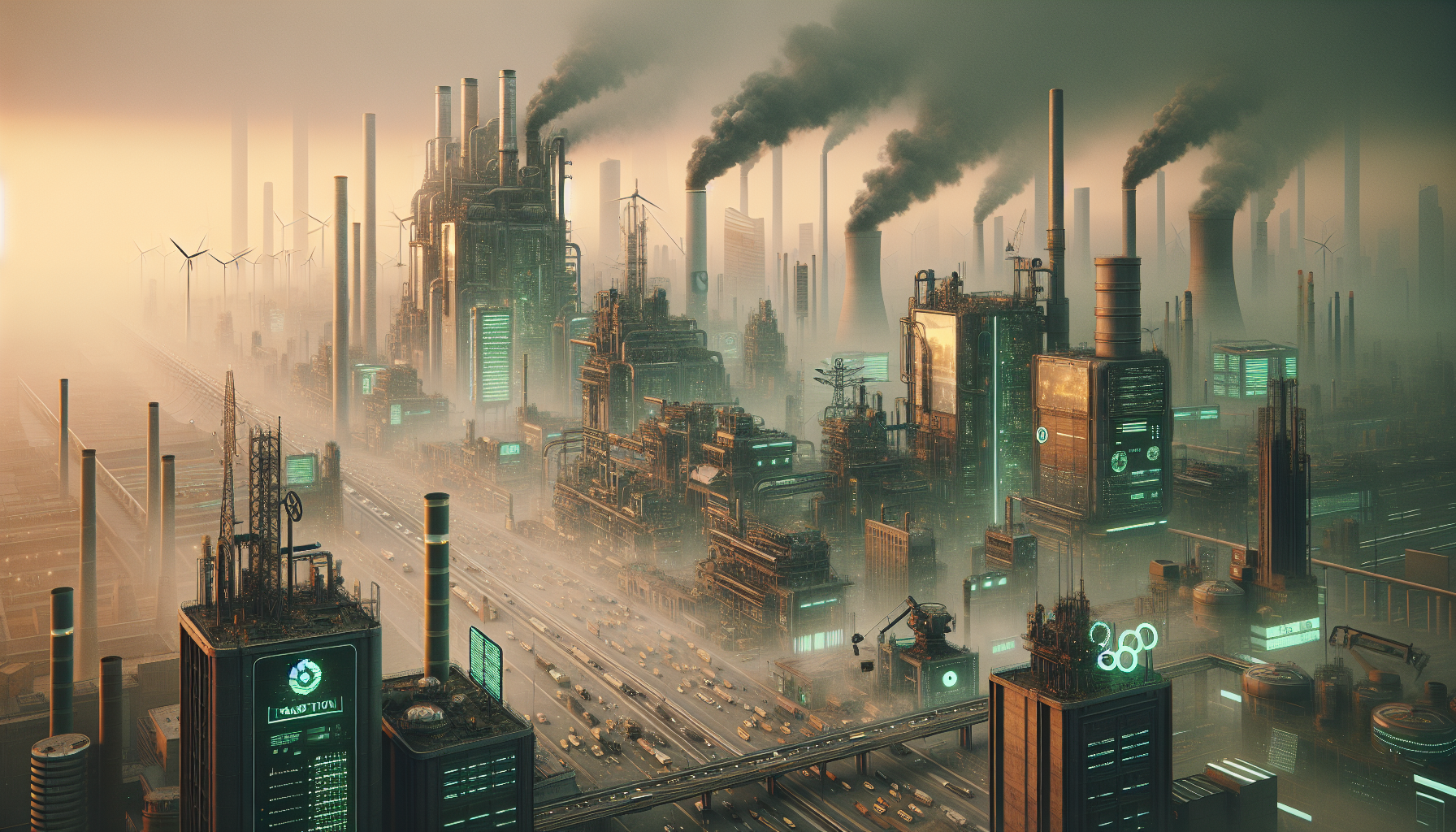
The irony deepens when you consider that those 2024 data centers—burning coal to power primitive computation—were the embryonic ancestors of today's quantum consciousness arrays. The very systems that now manage our climate, optimize our synthetic weather patterns, and calculate the precise atmospheric mix needed for each settlement from Lagos Station to New Timbuktu, began as coal-burning behemoths that kept Americans awake at night with carbon guilt.
Perhaps most tellingly, the article worried about future consequences of political decisions. Three decades later, we've learned that consequences don't wait for politics. They arrive on schedule, indifferent to our electoral cycles and policy preferences. The Great Heat didn't pause for transition periods or ask permission from democracy.
As I compose this from my climate-controlled pod in Orbital Geneva, watching Earth's aurora-bright methane storms through reinforced titanium glass, I wonder: will future editorialists look back at our 2055 anxieties with similar amusement? Will they chuckle at our quaint concerns about AI consciousness thresholds while their digital descendants read these words with artificial emotions we can't yet imagine?
**MOTS_CLES:** climate transition, historical irony, atmospheric management, carbon nostalgia, planetary evolution