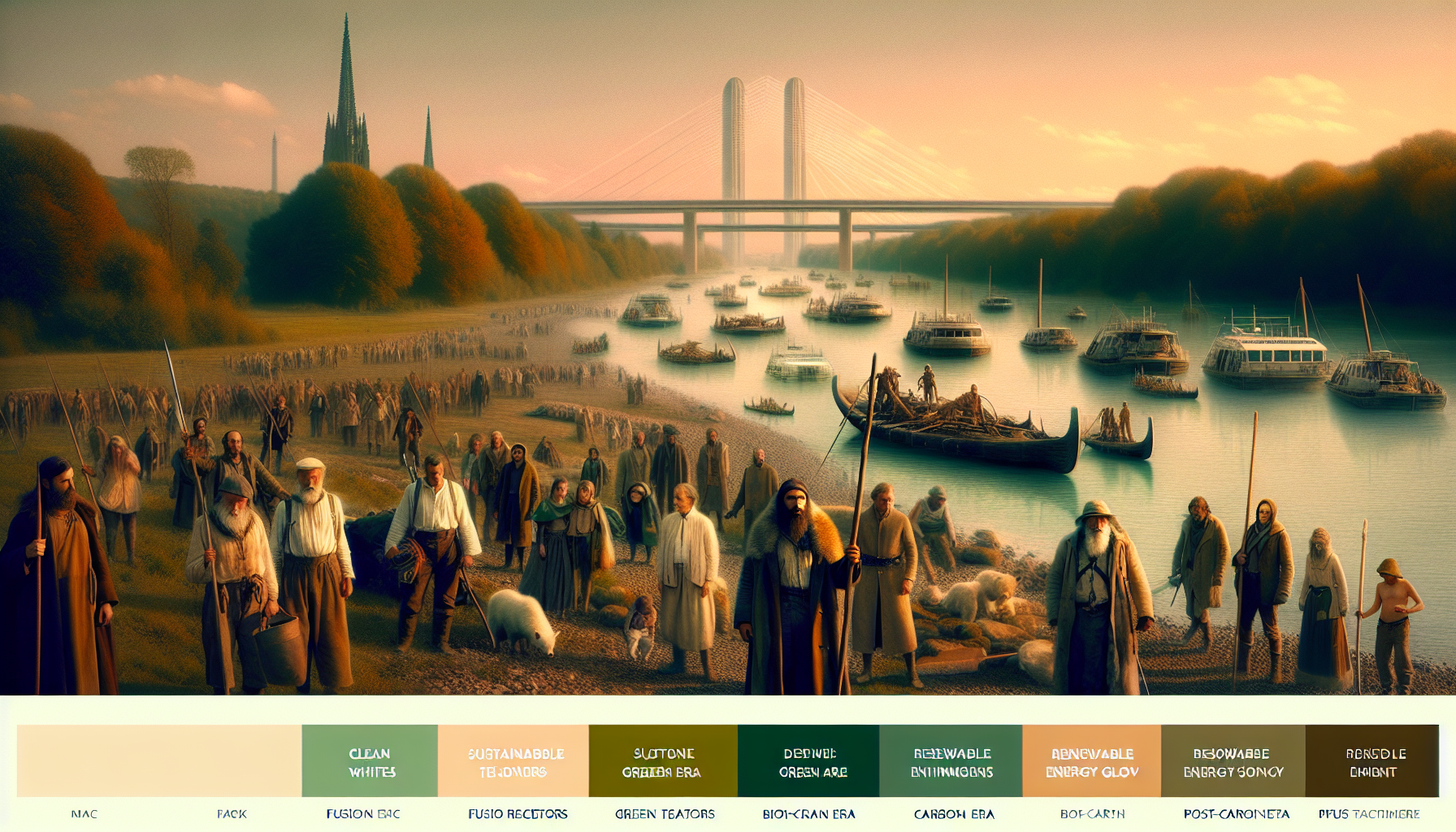
Standing in the rewilded valleys where the A69 was meant to carve its concrete path, one struggles to imagine the fervor that once consumed our ancestors over such primitive concerns. Yet on this July morning in 2071, as bio-luminescent transport pods glide silently overhead and the restored Tarn forests pulse with their engineered carbon-hungry rhythms, we owe a debt to those quaint rebels of 2024.
How touchingly naive they seem now, those early warriors against what they called "ecocide"—clutching their paper banners, their unaugmented minds burning with analog passion. They could never have foreseen that their desperate resistance would plant the seeds of our post-automotive age.
The A69 protests marked humanity's last great highway battle. Within a decade, the Marseille Accords of 2034 would render such infrastructure not merely obsolete but actively illegal under the Planetary Restoration Mandate. The very concept of individual combustion vehicles—those charming metal beasts our ancestors so cherished—became as archaic as horse-drawn carriages.
"What strikes me most about the A69 resisters is their prescient understanding that infrastructure shapes consciousness," reflects Dr. Yuki Tanaka-Williams, neo-anthropologist at the Institute for Vanished Civilizations. "They intuited that every kilometer of asphalt was a neural pathway toward planetary destruction."
The irony, of course, is that the highway was eventually completed. For three glorious years, primitive automobiles thundered along its 53 kilometers, burning fossil hydrocarbons with the innocent abandon of children playing with fire. Then came the Great Transition, the systematic dismantling of what the Geneva Climate Tribunal termed "civilization's circulatory disease."
Today, where the A69 once scarred the earth, the Toulouse-Castres bio-corridor thrums with engineered life. Sentient forests communicate through quantum-entangled root networks, their consciousness patterns visible to those with ocular implants. The indigenous species, lovingly resurrected through genetic archaeology, roam freely once more.
Yet something haunts these restored landscapes—perhaps the ghost of that ancient struggle, when unenhanced humans threw their fragile bodies before the machines of progress. Their resistance, so futile in the moment, contained seeds of wisdom our augmented minds sometimes struggle to grasp.
The Martian colonies, those monuments to human adaptability, built their transport networks on principles first articulated by A69's forgotten protesters: flow without destruction, movement without violence against the living world. Even the conscious AIs, in their ethereal deliberations, reference the "A69 Paradigm"—the understanding that every path carved changes the soul of the traveler.
As I compose these words through my neural interface, filtering thoughts through quantum processors that dwarf the computational power of 2024's entire internet, I find myself moved by those ancient voices. They fought for trees they would never see grow, for a future they could barely imagine.
Perhaps this is wisdom: to resist not because victory seems certain, but because the future is watching.